




If you're buying a home built before the 1970s, there's a chance it was once heated with furnace oil. In many cases the oil was stored in a steel tank buried in the yard, and when the owners switched to natural gas or electric heat, the tank was often left in the ground. Decades later, some of those tanks are still there, and some have started to leak. Here's what to look for, why it matters, and what to do if a home you're buying might have one.
Why So Many Older BC Homes Have Oil Tanks
Before natural gas lines reached many neighbourhoods, oil was one of the most common ways to heat a house. A delivery truck filled the tank through a pipe at ground level, and a line ran from the tank to the furnace in the basement.
When homes converted to gas, the old tank wasn't always dug up. Sometimes it was emptied and left in place, sometimes it was filled with sand or foam, and sometimes nothing was done at all. Older neighbourhoods across Metro Vancouver and the Fraser Valley can still have tanks that nobody has thought about in years.
Why a Buried Oil Tank Matters
An empty, properly decommissioned tank is usually a manageable issue. The concern is a tank that was never dealt with, or one that has rusted through.
Signs of an Oil Tank We Look For
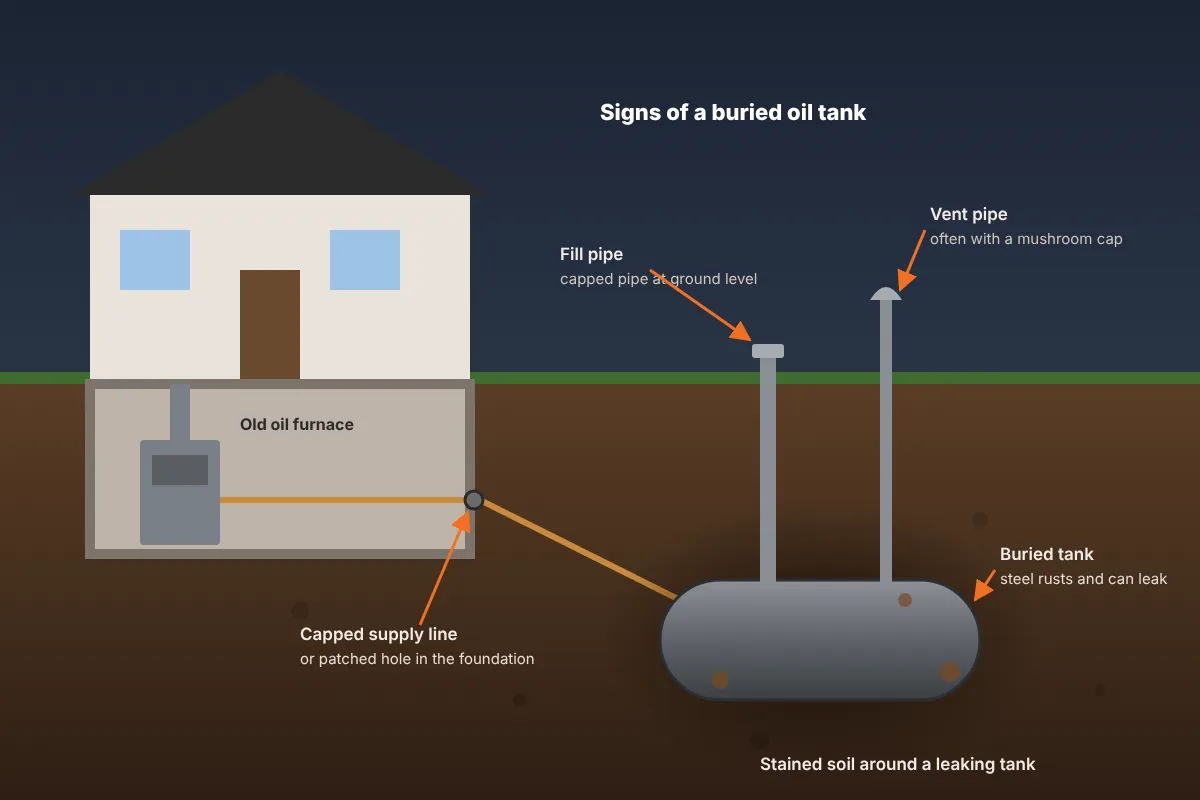
A home inspection is visual, so we can't see underground. What we can do is look for the clues an oil system leaves behind:
If we see any of these, we photograph them, note them in your report, and recommend next steps. With real-time report writing, you'll have that report on site, usually within 15 minutes.
What Is an Oil Tank Sweep?
A tank sweep is a scan of the property by an oil tank contractor, usually with a metal detector and sometimes ground-penetrating radar. It tells you whether there's likely a tank buried on the lot and where it is. Sweeps are quick and inexpensive compared with the cost of a surprise tank, and many buyers make one a condition of their offer on older homes.
If a sweep finds a tank, the contractor can usually tell you whether it was decommissioned and what removal would involve.
Removal and Permits: Check With Your Municipality
Rules for removing or decommissioning a buried oil tank are set locally and vary from city to city. Some municipalities require a permit and an inspection before the hole can be filled. Procedures, permit requirements and costs all differ.
Before you buy, or before you remove a tank, contact your municipality to ask what it requires, and talk to an experienced oil tank removal contractor who can advise you on the procedure, permits and cost for your property. If the soil turns out to be contaminated, the contractor will typically bring in an environmental professional to manage the cleanup.
Questions to Ask the Seller
The Bottom Line
A buried oil tank isn't automatically a deal breaker, but it's something you want to know about before you remove subjects, not after. A home inspection will flag the visible signs, a tank sweep will confirm whether a tank is there, and your municipality and an oil tank contractor can tell you what it will take to deal with it.
If you're looking at an older home anywhere from Hope to Whistler, we'll check for oil tank clues on every inspection at no extra cost.
Buying an Older Home?
We check for oil tank fill pipes, vent pipes and capped supply lines on every inspection, along with knob-and-tube wiring, Poly-B and more. With real-time report writing, reports are delivered on site within 15 minutes, 99% of the time.
Book Your Inspection Now